

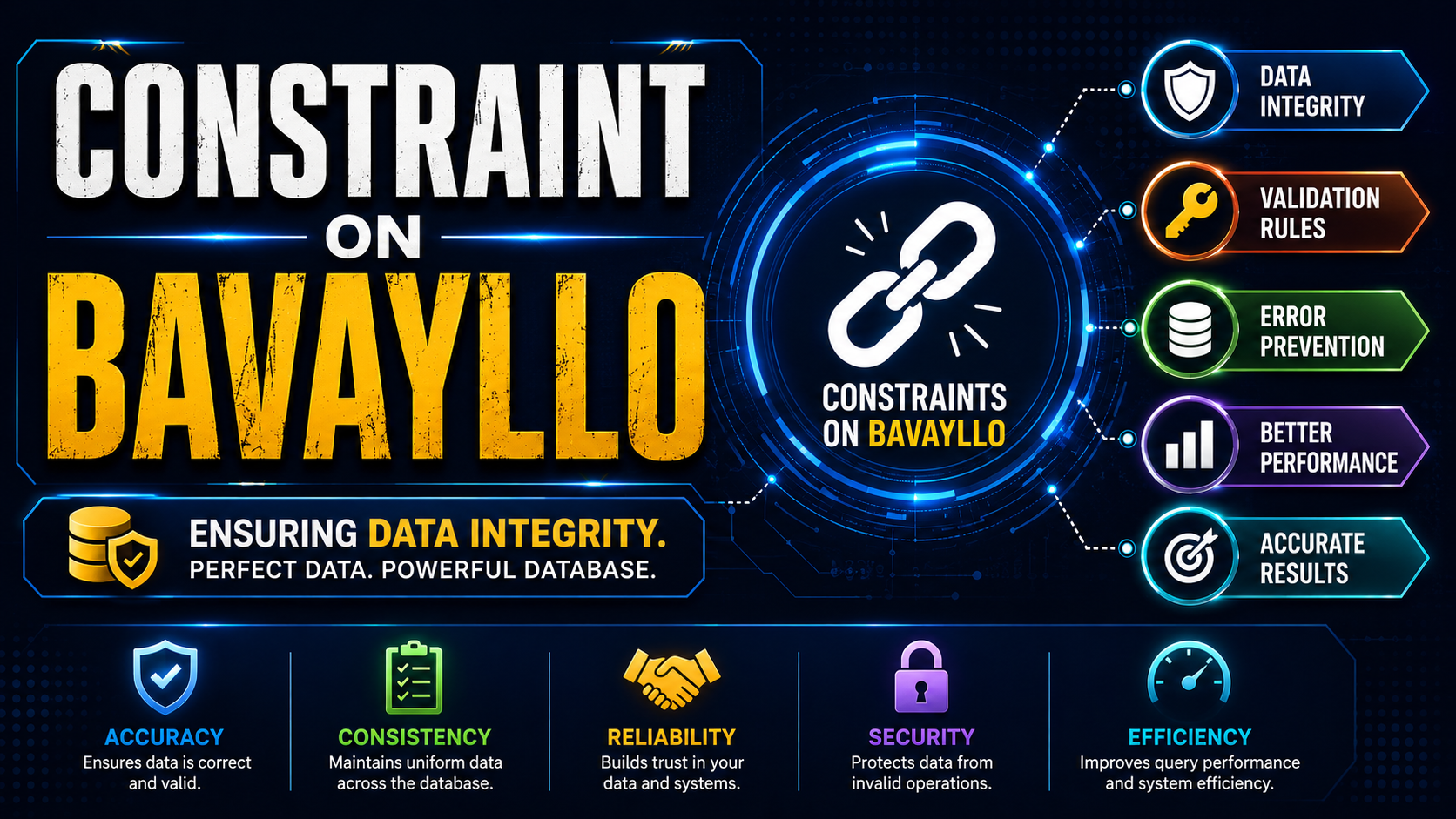
What Is The Constraint On Bavayllo?
A constraint on Bavayllo is a limitation that affects how Bavayllo works grows or reacts to situations. It is not a mistake or a random error message that appears out of nowhere. Instead it is a built-in limit that determines how Bavayllo behaves when certain levels are reached. If you have ever experienced slowdowns, blocked actions or unexpected restrictions while using Bavayllo then you have already seen this limitation in action. This article will explain the concept of constraints on Bavayllo in terms in simple terms, covering where these limitations come from why they exist and how to manage them better.
Understanding Bavayllo As A System
Core Components Of The Framework
Bavayllo works like a structure where many parts work together not separately. Data flow, access permissions, processing logic and user interaction all work together in the environment. Each of these parts relies on the others to run smoothly. When one part slows down or reaches its limit the rest of Bavayllo usually feels the effect afterward. That is why it is essential to understand the framework before looking at its limitations.
Why Bavayllo Is Interconnected
The interconnected design of Bavayllo is intentional not accidental. Developers build systems like this so that different functions can share resources efficiently rather than work independently. This approach keeps Bavayllo lightweight and consistent across uses. However it also means that a small limitation in one layer can affect other processes at once. This interdependency is the basis for every limitation discussed in this guide.
What Does Constraint Mean Here?
Constraint Versus Limitation Versus Bottleneck
These three words are often used interchangeably. They have slightly different meanings. A limitation is simply a boundary that exists by default. A bottleneck is a point where the flow slows down because one part cannot keep up with the rest. A constraint on the hand other is usually a rule or condition that controls behavior within Bavayllo. Recognizing this difference helps diagnose issues instead of assuming every slowdown has the same cause.
Why Constraints Exist By Design
Every built system needs boundaries and Bavayllo is no exception. Without boundaries resources could be used unevenly leading to instability across the platform. These boundaries protect performance, security and long-term reliability rather than just frustrating users. Once the design intention is understood limitations start to feel less like obstacles and more like guardrails doing their job.
Common Types Of Bavayllo Limitations
Technical And Performance Restrictions
Technical restrictions usually appear as processing delays, memory limits or reduced responsiveness under load. These limits often become noticeable when multiple functions run at the same time and compete for the same resources. Performance-based restrictions tend to be the visible type since they directly affect speed and user experience. Identifying them early makes troubleshooting much easier.
Operational And Workflow Boundaries
Operational boundaries control how tasks move through Bavayllo from start to finish. These might involve permission rules, sequencing requirements or dependency checks that must be satisfied before a process continues. While these boundaries can feel restrictive they usually exist to prevent workflow errors that could cause problems later. Understanding them helps teams plan around expected checkpoints instead of being caught off guard.
Resource And Scalability Caps
Resource caps limit how much capacity a single process or user can use at any given time. Scalability limits meanwhile define how far Bavayllo can grow before performance starts to decline. Both types of caps are designed to protect the stability of the platform. They become especially relevant for operations that push Bavayllo closer to its upper limits.
Root Causes Behind the Bottlenecks
Interdependent Layers and Ripple Effects
Bavayllo’s components depend on each other a lot. So when one part has a problem it does not stay an issue for long. For example if the system takes too long to process data it can slow down how users interact with it right away. This is one reason why it can be hard to figure out what is going on at first. Once we see how all the parts work together it becomes easier to find the main cause of the problem.
Version Conflicts and Compatibility Gaps
When the different parts of the system are not on the same version or when some parts are outdated it can cause unexpected problems. If one part of the system needs a different version than what is actually installed it can cause conflicts. These problems can seem random. The reason behind them is usually simple. If we keep all the parts of the system up to date and working together we can avoid a lot of these issues.
Impact on Performance and Scalability
If Bavayllo has a limitation it can affect how well the system works when it needs to handle users. The speed, responsiveness and stability of the system all depend on how we manage these limitations. If we ignore these problems they can become bigger issues over time. Companies and users who need the system to work consistently should think about these limitations all the time not just once.
Signs You Have Hit a System Boundary
There are signs that tell us when we have reached the limit of the system. If the system slows down suddenly. If some actions are blocked or if we get error messages a lot or if the system is not responding well these are all signs that we have reached the limit. These signs usually appear slowly before they become more noticeable when the system is being used a lot. If we pay attention to these signs we can make changes before the problem gets worse.
Why Restrictions Are Not Always Bad
Stability, Security and Control
People often think that restrictions are a bad thing but they actually help keep the system safe. They prevent the system from being used too much or from being accessed by people who should not have access or from doing things that are not predictable and could cause problems. The restrictions that are in place for security help keep processes safe. If we think of these restrictions as protection instead of obstacles we will approach them differently.
The Traffic Light Analogy
We can think of these restrictions like traffic lights in a city. They slow down traffic for at times but without them the roads would be chaotic. The restrictions in Bavayllo work the same way; they control the activity so that the system is not overwhelmed at once. This helps keep the system working well over time.
Strategies to Reduce These Restrictions
Optimization Best Practices
To reduce problems we usually start by keeping all the parts of the system up to date and configured correctly. If we remove things that are not necessary and clear out old data and make the workflows more efficient it can reduce the pressure on the system a lot. Checking the system regularly also helps us catch problems before they become bigger issues. These habits are simple. They make a big difference over time.

Redesign or Adapt
Sometimes just making the system work better is not enough. We need to make bigger changes. This might mean changing the way a workflow is done or changing the permissions or adjusting how resources are used. We need to decide if we should just fix the problem quickly or make bigger changes. If the problem keeps happening it usually means that we need to make a change.
Real World Comparisons
We can see patterns in other digital systems, like APIs, cloud infrastructure and production pipelines. In each case one weak point can affect how well the whole system works. These comparisons help us understand the concept better because the logic is the same across systems. If we recognize these patterns we can use solutions that have worked in other areas.
Best Practices, For Long Term Management
To keep the system stable for a long time we need to think of limitations as a normal part of managing the system not just a one-time problem. If we check the system regularly update it proactively and keep records it will work better over time. Teams that keep an eye on these limitations tend to have fewer surprises later on. If we start doing this it will pay off a lot as the system is used more.
Conclusion
The conclusion is that understanding a constraint on Bavayllo is about realizing that limitations exist for a reason and not by chance. These limits help keep things safe and working well over time even if they seem annoying at first. When you find out where the restrictions come from and use the ways to make things better it is much easier to get better performance. Seeing these limits as guides instead of problems makes working with the system much easier in the long run.
Faqs
What does a constraint on Bavayllo actually mean?
It means a built-in limit that controls how the system works, grows or reacts in situations.
Are these restrictions a sign of a broken system?
No, they are usually choices made on purpose to keep things steady and stop things from being used too much.
What usually causes performance slowdowns within Bavayllo?
Things like parts that depend on each other versions that don’t match and limits on resources are the reasons.
Can these limitations be Removed?
Some can be made less strict by improving things but some limits might need changing the way work is done instead.
Why should these boundaries be treated as ongoing, not one-time fixes?
Because how people use the system and what they need changes over time so checking things regularly is important to keep performance steady.
